Does Any of This Sound Familiar?
If any of these feel familiar, a more stable solution exists. Implant-retained dentures in Mountain Home, ID are giving patients a completely different experience.
What Happens When You Wait?
Bone Changes Every Month
Once teeth are missing, the jawbone begins to shrink. Every month without stimulation means more bone loss and a more complex path forward.
Denture Fit Gets Worse Over Time
As the jaw changes shape, your current dentures fit less and less well, leading to more slipping and more discomfort.
Adjustments Get Costlier
Repeated relines, adhesives, and replacements add up. Waiting doesn't save money; it delays the investment that actually solves the problem.
Daily Confidence Takes a Hit
The longer you manage slipping dentures, the more you limit yourself. Social situations, meals, and conversations become things to avoid rather than enjoy.
Treatment Becomes More Involved
Significant bone loss may require grafting before implants can be placed. Acting sooner typically means a simpler, faster path to stability.
Quality of Life Keeps Waiting
Every month without a stable solution is another month of adjusting your life around your dentures, not the other way around.
The sooner you act, the simpler and more straightforward the path to stable, comfortable dentures tends to be.
What Are Implant-Retained Dentures?
Implant-retained dentures are a secure tooth replacement solution that combines the familiar shape of traditional dentures with the stability of dental implants (permanent tooth replacements anchored in the jawbone). Two to four titanium implant posts are placed in the jaw, and the denture attaches directly to those posts using a snap or bar connection. The result is a denture that stays firmly in place during everyday activities, yet can still be removed for cleaning at the end of the day.
At our Mountain Home practice, we plan every implant-retained denture case using CBCT imaging (a fast, low-radiation 3D scan of the jaw) and a fully digital workflow from start to finish. This level of planning means more accurate placement, a better-fitting final denture, and fewer surprises along the way. For patients considering implant-retained dentures in Mountain Home, ID, this digital approach makes a meaningful difference in both the process and the outcome.
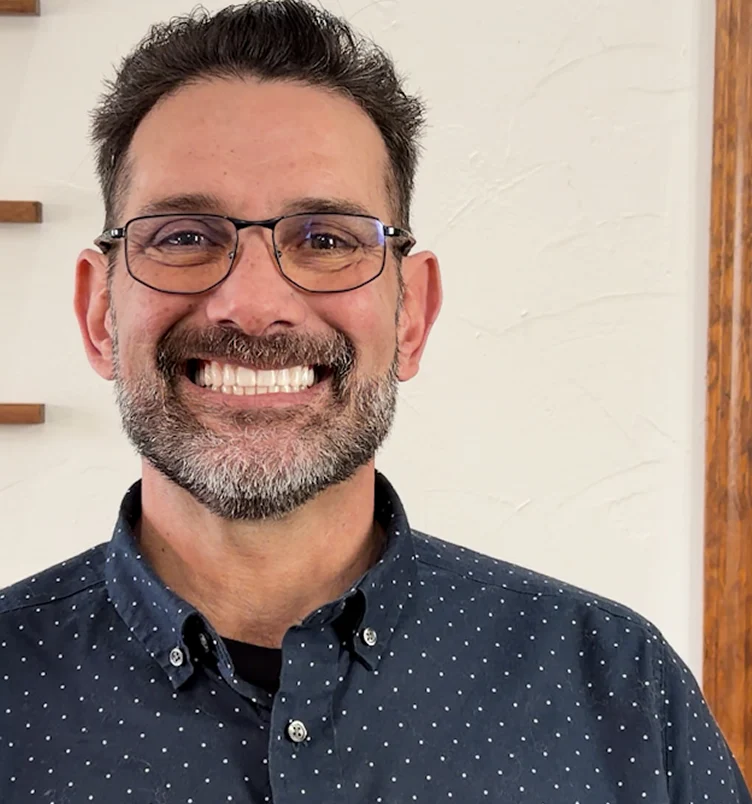
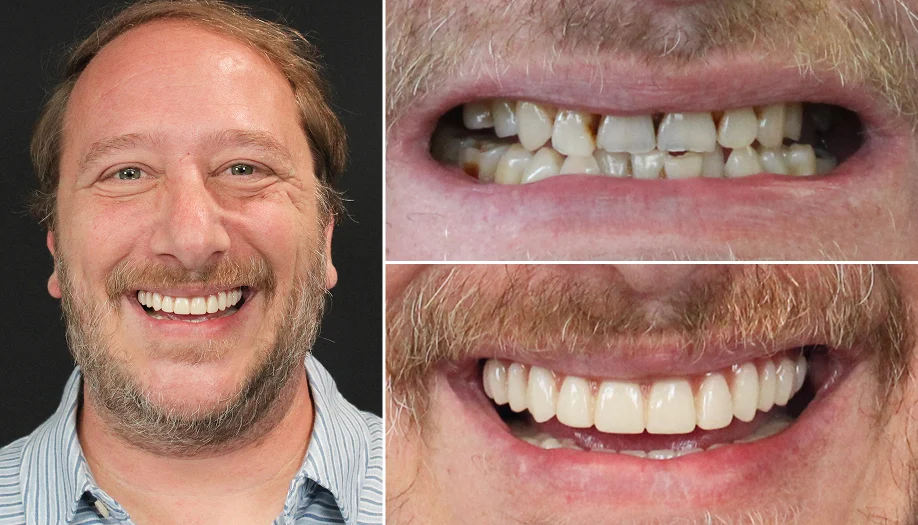
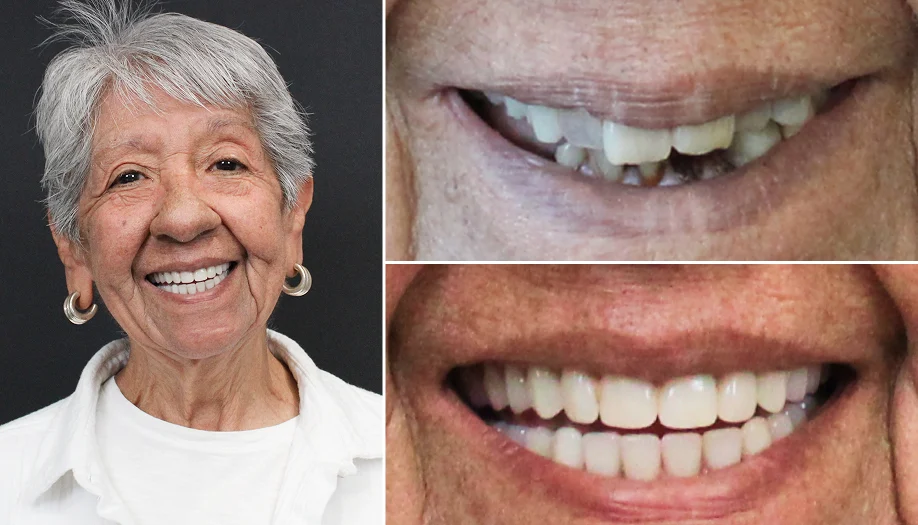
Transformations That Last
Daniel Marchant
David Bohrer
Tim Bollinger
Be our Next Success Story!
Which Implant-Retained Denture Option Is Right for You?
| Factor | Removable (Snap-In) | Fixed |
|---|---|---|
| Best suited for | Patients wanting stability with easy removal | Patients wanting a non-removable, permanent feel |
| Removal for cleaning | Yes, removed nightly | No, cleaned in place like natural teeth |
| Number of implants | Typically 2-4 | Typically 4-6 |
| Stability level | Significantly more stable than traditional dentures | Maximum stability, no movement |
| Maintenance | Daily removal and cleaning | Brushing and flossing in place, professional cleanings |
| Bone requirements | Moderate bone volume needed | Adequate bone or grafting required |
| Treatment time | Moderate | Moderate to longer depending on grafting needs |
| Key advantage | Removability with far greater security than standard dentures | Closest to natural teeth in feel and function |
| Key consideration | Still removable; requires daily cleaning routine | Higher complexity; non-removable requires in-place care |
Download our Dental Implant Pricing & Information Guide
In the guide, you’ll learn about:
- Dental Implant Options
- Factors That Affect Your Eligibility
- Average Pricing
Benefits of Implant-Retained Dentures
See What's Possible for Your Smile
These aren’t just teeth; they’re life-changing transformations that restore confidence and comfort. Each before-and-after photo represents a patient who trusted us with their smile journey.
Dental Implants
Dental Implants
Be our Next Success Story!
Request an appointment with one of our doctors and start your smile journey today.
Are Implant-Retained Dentures Right for You?
Not Sure If You Qualify?
What to Expect with Implant-Retained Dentures
Consultation and Planning
Your first step is a thorough exam that includes a 3D CBCT scan of your jaw. This low-radiation scan shows us your bone volume, nerve locations, and jaw structure in precise detail. We review the results with you openly, discuss both implant options, and put together a plan that matches your goals. You leave this appointment knowing exactly what to expect.
Implant Placement
On the day of your procedure, we make sure you're completely comfortable before anything begins. Sedation options, including nitrous oxide and oral sedation, are available to keep you relaxed throughout. The implant posts are placed into the jawbone with great care. Most patients are surprised by how manageable the experience feels. You'll go home the same day with clear aftercare instructions and our team available for questions.
Healing and Integration
Over the next few months, the implants fuse with your jawbone through a natural process called osseointegration (where the titanium bonds with living bone). This is what gives implant-retained dentures their stability. We monitor your healing at scheduled check-ins and keep you informed at every stage.
Denture Fitting and Attachment
Once your implants are fully integrated, we take precise digital scans to design your final denture. Through our Dandy Digital Lab integration, your denture is fabricated using a fully digital workflow, no messy impressions required. The finished denture is fitted, adjusted, and snapped securely into place. You'll feel the difference immediately.
Final Delivery and Confidence
Check We spend time making sure your fit is right, your bite feels natural, and you're completely comfortable with your new dentures. You'll walk out knowing exactly how to care for them and with the confidence that comes from a stable, secure smile.
Ready to Leave Denture Worries Behind for Good?
Recovery After Implant-Retained Dentures
First 24-48 Hours
Some mild tenderness and swelling around the implant sites is completely normal and expected. Plan to rest, stick to soft foods, and avoid anything strenuous. Over-the-counter pain relief is typically all that's needed, and most patients find the first couple of days much more comfortable than they anticipated.
First 1-2 Weeks
Tenderness fades steadily over the first week. You'll continue eating softer foods while the implant sites heal from the outside in. Light activity is fine after the first couple of days; just avoid anything that creates significant physical strain. Most patients return to their regular routines within a week to ten days.
Long-Term Healing
The deeper integration process, where your implants fuse with the jawbone, takes several months. You won't feel this happening, but it's what creates the lasting stability of your new dentures. We schedule check-ins throughout this phase to confirm everything is progressing as it should.
Questions About Recovery? You won't go through it alone.
Implant-Retained Dentures vs. Your Other Options
| Factor | Implant-Retained Dentures | Traditional Dentures | Fixed Dental Bridge | Removable Dental Bridge |
|---|---|---|---|---|
| Stability | Snaps firmly onto implants; minimal movement | Rests on gums; prone to shifting | Fixed in place; does not move | Anchored to existing teeth; some flex possible |
| Bone preservation | Yes, implants stimulate the jawbone | No; bone loss continues over time | Limited; no root stimulation | No; no root stimulation |
| Removable | Yes; removed for cleaning | Yes; removed nightly | No | Yes |
| Chewing function | Significantly improved over traditional dentures | Limited by stability | Good for replacing one or a few teeth | Moderate |
| Adjacent teeth impact | None; implants are independent | None; rests on gums | Requires crowning healthy adjacent teeth | Anchors to existing teeth |
| Maintenance | Remove and clean nightly; professional cleanings | Daily cleaning and adhesive | Brush and floss normally | Remove and clean |
| Treatment time | Moderate; includes healing period | Shorter; no surgery involved | Moderate | Shorter |
| Initial investment | Higher upfront | Lower upfront | Moderate | Moderate to lower |
| Long-term value | Strong; implants slow bone loss and last decades with care | Lower; requires ongoing adjustments and replacements | Moderate; depends on adjacent tooth health | Lower; may need replacement |
| Best suited for | Missing all or most teeth; wanting stability with removability | Patients not suited for or not pursuing implants | Replacing one to three consecutive missing teeth | Limited missing teeth; not pursuing implants |
Flexible Payment Plans for Your Smile
NO Credit Score Impact Until Plan Selected.
Don't Wait to Smile. Check out Our Payment Options.
Implant-Retained Denture FAQs
How are implant-retained dentures different from regular dentures?
How many implants are needed to support the denture?
Will the procedure hurt?
How long does the whole process take from start to finish?
Can I sleep with implant-retained dentures in?
Am I a candidate if I have significant bone loss?
How do I clean implant-retained dentures?
How long do implant-retained dentures last?
What if I currently have full dentures?
Is financing available for implant-retained dentures?
Still Have Questions?​