Does a Missing Tooth Feel Like This?
If any of these feel familiar, a solution is closer than you think. Dental bridges can restore both function and confidence in a way that fits your life.
What Happens If You Wait?
Teeth Begin to Shift
Neighboring teeth lose their anchor and slowly drift into the open space, disrupting your bite.
Bone Loss Accelerates
Without a tooth root providing stimulation, the jawbone underneath begins to deteriorate over time.
Chewing Patterns Change
Favoring one side to avoid discomfort puts uneven stress on your remaining teeth and jaw.
Treatment Becomes More Complex
The longer a gap remains, the more preparation is needed before a bridge or implant can be placed.
Costs Increase Over Time
What starts as a straightforward bridge case can grow into a more involved treatment plan.
Fewer Options Remain
Significant bone loss or tooth movement can limit which restorative options are still available to you.
Acting sooner means a simpler path to results and more choices for how to get there.
What Is a Dental Bridge and How Does It Work?
A dental bridge (a replacement for one or more missing teeth) uses the teeth on either side of a gap as anchors to hold a custom-made artificial tooth in place. The structure consists of two crowns cemented onto the neighboring teeth, with a pontic (the replacement tooth) suspended between them. The result is a fixed restoration that looks, feels, and functions like a natural tooth and does not need to be removed.
Our approach to dental bridges in Mountain Home combines digital scanning technology with precise custom fabrication to ensure each bridge fits accurately and comfortably. At The Dome, we use intraoral scans rather than traditional impressions, and our connection to Dandy Digital Lab means your restoration is designed and built with high-quality materials chosen to match your bite and appearance. Every bridge is planned with your long-term comfort in mind.
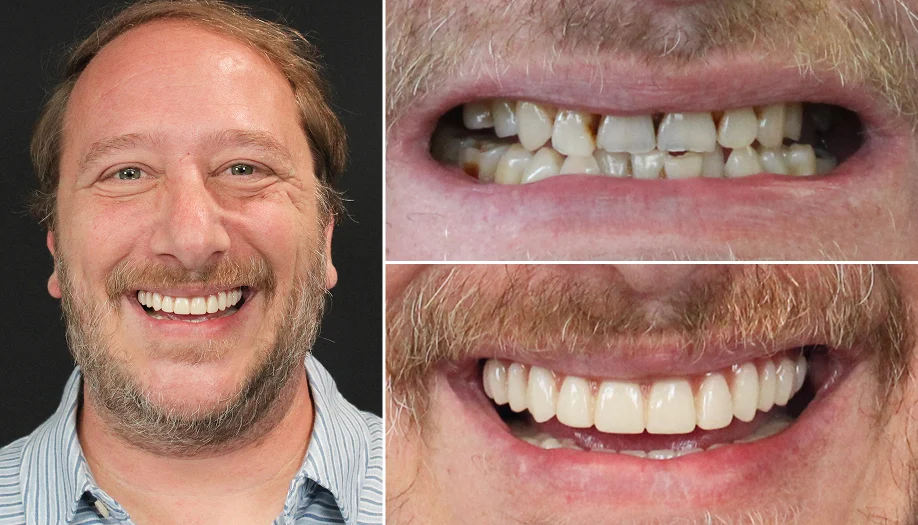
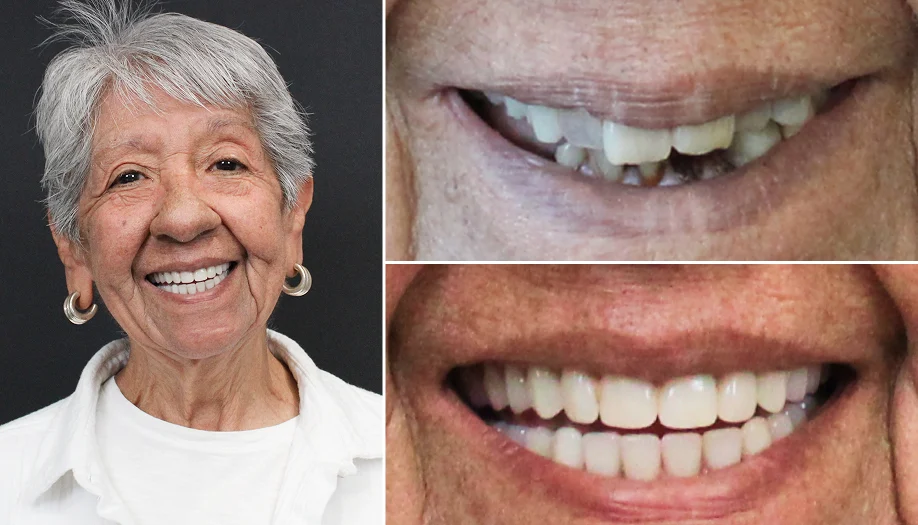
Transformations That Last
Elfie Stoehr
Be our Next Success Story!
Which Type of Dental Bridge Is Right for You?
| Factor | Resin-Supported Bridge | Traditional Bridge | Implant-Supported Bridge |
|---|---|---|---|
| Best suited for | Front teeth with light bite pressure | Back or front teeth with strong adjacent teeth | Any location; no adjacent teeth needed |
| Preparation required | Minimal; no full crowns on adjacent teeth | Adjacent teeth shaped for crowns | Implant placement required |
| Longevity | 5-10 years with proper care | 10-15 years with proper care | 15-25+ years with proper care |
| Stability | Moderate | High | Highest |
| Adjacent teeth impact | Very low | Requires reshaping | None |
| Number of visits | 2 | 2 | Multiple over several months |
| Material options | Porcelain, composite | Porcelain, zirconia, gold | Zirconia, porcelain |
| Key advantage | Conservative; preserves tooth structure | Proven, widely covered solution | Does not rely on neighboring teeth |
Benefits of Dental Bridges
See What's Possible for Your Smile
These aren’t just teeth; they’re life-changing transformations that restore confidence and comfort. Each before-and-after photo represents a patient who trusted us with their smile journey.
Dental Implants
Dental Implants
Be our Next Success Story!
Request an appointment with one of our doctors and start your smile journey today.
Is a Dental Bridge Right for You?
Not Sure Whether a Bridge Is the Right Fit?
Your Dental Bridge Treatment, Step by Step
Consultation and Planning
Your first visit begins with a thorough exam and a digital scan of your teeth using our intraoral scanner. No impressions, no mess. We review your bite, the health of adjacent teeth, and which bridge type fits your needs. You leave with a clear treatment plan and an honest picture of what to expect.
Tooth Preparation and Temporary Bridge
For traditional and implant-supported bridges, the anchor teeth are gently shaped to accommodate the crowns. A digital scan captures precise measurements, and a temporary bridge is placed to protect your teeth and maintain appearance between appointments. Most patients are comfortable throughout this visit with local anesthetic applied beforehand.
Custom Bridge Fabrication
Your case is submitted to our digital lab, where your permanent bridge is crafted from high-quality porcelain or zirconia to match the shape and shade of your natural teeth. We use precise digital files rather than physical models, which improves fit accuracy significantly.
Final Placement and Adjustment
When your permanent bridge arrives, you come in for fitting. We check the bite carefully, make any needed adjustments, and cement the bridge into place. You leave with a fully restored smile that functions and feels like your natural teeth.
Ready to Restore Your Smile with a Bridge?
What to Expect After Dental Bridge Placement
First 24-48 Hours
You may notice some sensitivity around the prepared teeth and gum tissue near the bridge. Over-the-counter pain relief handles this well for most patients. Sticking to softer foods during this period is a good idea while the area settles, and mild temperature sensitivity is common and typically fades within a few days.
First Week
Sensitivity continues to decrease as the area heals and you adapt to the feel of your new bridge. Most patients return to a normal diet and full daily routine within a few days. Cleaning around the bridge is straightforward; we will walk you through the right technique for flossing underneath the pontic so gum health is maintained long term.
Questions About Recovery? We are here to help.
Dental Bridges vs. Implants vs. Partial Dentures
| Factor | Dental Bridge | Dental Implant | Partial Denture |
|---|---|---|---|
| Stability | Fixed; non-removable | Fixed; non-removable | Removable; may shift |
| Bone preservation | Does not stimulate bone | Preserves bone through integration | Does not preserve bone |
| Adjacent teeth impact | Requires reshaping anchor teeth | No impact on adjacent teeth | Clasps attach to existing teeth |
| Chewing ability | Strong; nearly natural function | Strongest; full natural function | Moderate; some limitations |
| Appearance | Natural-looking | Most natural-looking | Natural but may show hardware |
| Maintenance | Standard brushing; special flossing | Brush and floss like natural teeth | Must remove and clean daily |
| Treatment time | 2 visits over 2-3 weeks | Several months including healing | 2-4 visits over several weeks |
| Initial investment | Moderate | Higher upfront | Lower upfront |
| Long-term value | Strong; 10-15 years with care | Highest; 15-25+ years with care | Lower; may need replacement sooner |
Flexible Payment Plans for Your Smile
NO Credit Score Impact Until Plan Selected.
Don't Wait to Smile. Check out Our Payment Options.
Dental Bridge FAQs
How long does a dental bridge typically last?
Will a dental bridge look natural?
Does getting a dental bridge hurt?
How do I clean around a dental bridge?
How many appointments does a bridge require?
Am I a candidate for a dental bridge if I have had bone loss?
What is the difference between a bridge and a partial denture?
Can a dental bridge fail, and what happens if it does?
Is there an age limit for getting a dental bridge?
What happens to the bone under a bridge over time?
Still Have Questions?​